It’s too darn hot. Blame global dimming
Earth is absorbing a lot more sunshine — and the air we cleaned up was quietly keeping us cool.
Adapted from the original article in The Economist

Before you read
What does dimming mean? Where else have you heard the word — lights, screens, a mood?
Your city has a heatwave. What is the local government’s advice? Who is affected the most? What are the most common symptoms of heatstroke?
Which of these is true? Tap the ones you believe.
Hover the dotted words for a definition. Tap the yellow-ruled phrases to open a task in the panel.
Earth is absorbing a lot more sunshine
Cole Porter had it right. It is too darn hot. On July 14th the surface temperature of Earth’s tropical and mid-latitude oceans was higher than on any other July 14th in modern records. The same was true for every other day in July, and for almost all of the days in June, too. Europe has gone through three heatwaves since May, and though the continent is better prepared for such things than it used to be, tens of thousands will have died as a result.
America’s Fourth of July celebrations took place under a sweltering “heat dome”. Supertyphoon Bavi, which saw well over a million people evacuated from the Chinese coast, owed much of its power to the rate at which it was able to suck up energy from the overheated sea. Fires are spreading far and wide. Worse is to come. The chances of this year being the hottest on record are growing; the El Niño getting under way in the Pacific all but guarantees next year will be.
Climate change is feeding on itself. The warming effects of greenhouse gases are driving processes that heat up the planet yet further. The one which is exciting — and alarming — scientists most is an unexpected reduction in an obscure but fundamental aspect of Earth: its albedo.
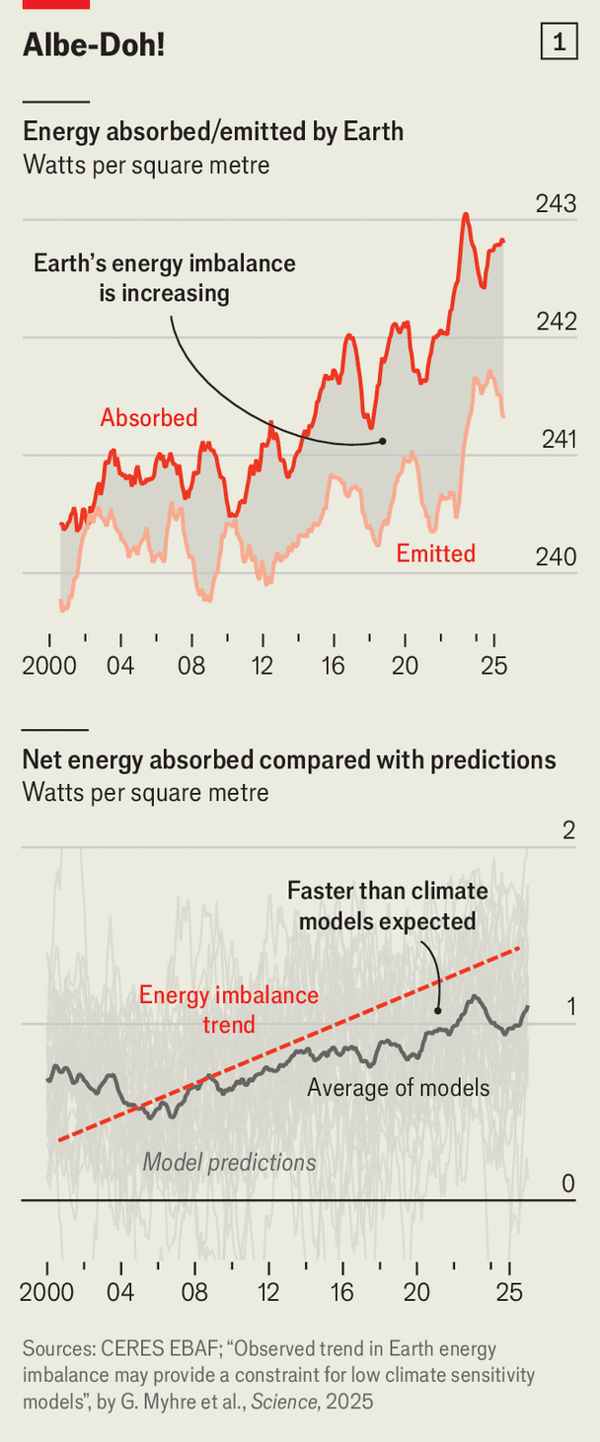
The albedo is the fraction of incoming sunlight that a surface or a planet reflects back whence it came. High albedos, whether they are created by white roofs or ice-covered seas, keep things cool; by contrast, when albedos are low, the incoming energy stays here on Earth, raising the planet’s surface temperatures. Robust satellite measurements of Earth’s albedo have now been taken for over two decades. They show it falling with surprising speed. The oceans, which are responsible for most of the sunshine’s absorption, have been accumulating much more heat as a result.
“Health agencies, Crutzen said, thought controlling the particles could save 500,000 lives a year; at the same time, by diminishing the sulphur’s cooling effect, the controls might increase global warming by perhaps 1°C (1.8°F).”
This is partly because of a scarcity of cooling clouds over the seas, a widely predicted effect of greenhouse warming. It is also owing to something else entirely. In 2006 — in fact, 20 years ago this month — the late Paul Crutzen, a world-renowned atmospheric chemist, wrote an article pointing out the “policy dilemma” embedded in efforts to control emissions of sulphur dioxide.
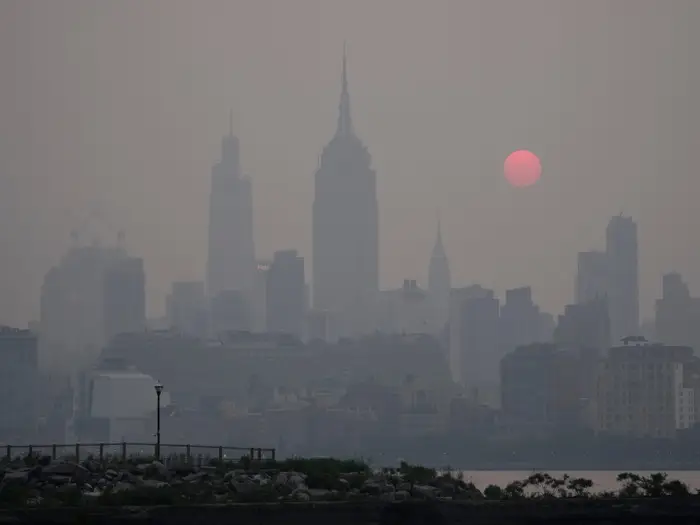
Sulphur dioxide, which comes from the burning of some fossil fuels, creates little particles in the atmosphere after it is emitted. They wreak havoc with human health. They also reflect sunlight back into space, thereby reducing the amount of energy that reaches Earth’s surface. Health agencies, Crutzen said, thought controlling the particles could save 500,000 lives a year; at the same time, by diminishing the sulphur’s cooling effect, the controls might increase global warming by perhaps 1°C (1.8°F).
Talk it through
1. Two separate reasons are given for the falling albedo. What are they?
2. Trace the chain: burning fossil fuels → ? → ? → ? → cooler planet.
3. What are the two opposite effects of sulphur particles?
4. Now state the ‘policy dilemma’ in your own words.
Before you read on
The second half of the article is about solutions. Write down two things you expect the article to propose, and one thing you’d propose yourself. What should be done to tackle global warming? Write 150–200 words.
Pressing Send opens your email app with your text already in the message, addressed to your teacher. Check it, then hit send there.
What, if anything, can be done
Net zero, methane, air conditioning — and the idea nobody wants to endorse out loud.
Recap before part two
1. Explain the sulphur ‘policy dilemma’ in two sentences.
2. Why is falling albedo bad news, and what are its two causes?
3. Use all but, look set to and wreak havoc with in sentences about anything except the climate.
4. Let’s see your predictions from the writing task!
Same as before: hover the dotted words, tap the yellow-ruled phrases.
Endurance is what remains
Both albedo-reducing trends look set to continue, adding yet more to the heat. The industrial cities of the developing world are hardly likely to sacrifice the health of their smog-choked inhabitants in order to slow warming for the world at large, so sulphur emissions will continue to fall. The climate feedbacks which reduce cloud cover will not stop while carbon-dioxide levels continue to rise. And even when the transition to renewable energy eats into the use of fossil fuels, as it is starting to do, what matters most is the cumulative level of greenhouse gases.
Around a decade ago the need to stabilise that cumulative level led lots of countries to embrace “net zero” goals. The idea’s proponents see putting no more greenhouse gases into the atmosphere than you are taking out as good planetary housekeeping. They are right. But it is an unavoidably slow process. What’s more, its critics are also correct when they say that only for the largest economies does a single country’s progress towards net-zero goals have any discernible effect on the world’s overall trajectory. The idea was conceived when America was a believer in international agreements and the level of idealism needed to imagine countries spurring each other on to better things was merely high — not, as it is now, delusional.
There are still places where climate change is understood to be important and where action can be co-ordinated. Being committed to net zero should buy a country a certain standing when it is negotiating other, more near-term options for limiting climate change, such as curbing methane emissions and the production of fluorinated gases used in cooling systems, both of which bring benefits faster than cutting carbon dioxide.
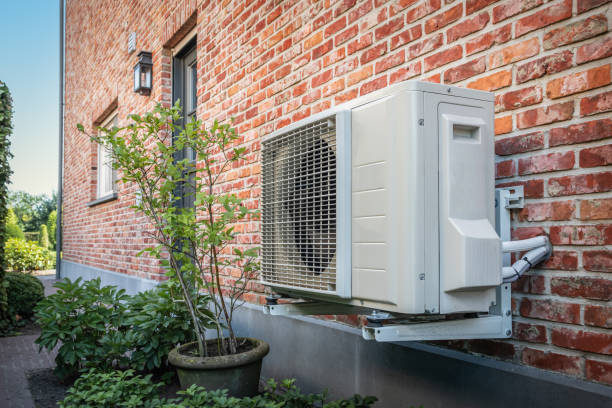
No form of emissions reduction, though, can quickly bend the current trajectory. Endurance is what remains. Making air conditioning more efficient, cheap and widespread saves lives and fits well with other policy goals, like making clean electricity cheap to produce and consume. Ten years ago a commitment to phase out the fluorinated gases in cooling systems was reached in Kigali, the capital of Rwanda. There is scope for extra international efforts to improve the machinery that uses them. This could double the cooling benefit of phasing out the gases.
“If nations can act in concert to warm the planet … they ought to be able to discuss the conditions under which they might cool it.”
The most radical response is to make Earth a bit more reflective again. Crutzen’s provocative suggestion for how to resolve his policy dilemma over sulphur emissions was to replace harmful aerosols with benign ones. The brightening of cooling clouds has been tried over the Great Barrier Reef, but the technology needed to do it at scale remains elusive. An Israeli-American company, Stardust Solutions, has raised money to develop “safe” aerosols that it thinks a country or set of countries could use to cool the planet from the stratosphere.
Some oppose such geoengineering fiercely; hardly anyone endorses it as a welcome path forward. But if nations can act in concert to warm the planet — as those of the International Maritime Organisation did when they enforced new restrictions on ships’ sulphur emissions in 2020 — they ought to be able to discuss the conditions under which they might cool it. Keeping silent about geoengineering does not stop someone from trying it. The more warming quickens, the sooner it may reach a point where, to quote Cole Porter again, anything goes.
Talk it through
1. The article shifts from prevention to endurance. Is that realism or defeatism? What does the author suggest as possible means of endurance?
2. Should any single country be allowed to cool the planet unilaterally? If not — who decides, and how would that ever be enforced?
3. What should people be taught about climate change? When, and how?
Vocabulary workshop
Precise adjectives
Tap a word, then tap a gap to place it there. Tap a filled gap to clear it.
Strong verbs and expressions
The word in the field is the one to replace. Keep the tense of the original.
Word formation
Tap a word, then tap a gap to place it there. Tap a filled gap to clear it.
Grammar workshop
Hedging
Hedging language is wording that softens a statement by making it less direct or less certain, using words like possibly, perhaps and might. Writers use hedging to limit scope, acknowledge uncertainty, or avoid overstating a claim.
Be careful with it: a sentence that sounds responsible in a research paper may seem hesitant in a business proposal, and a statement that feels strong in a meeting may appear overstated in an academic setting.
Rank these excerpts from the text, most certain at the top. Drag a line onto another to move it there.
Answers vary — these are for discussion, not marking.
Make three predictions about the world, your life or your country: one you are highly confident about, one you think is probable, and one you are not sure about. Hedge each one appropriately.
Inversion and fronting
What is the standard word order for each of these? Why did the writer choose otherwise?
1. Worse is to come.
2. … only for the largest economies does a single country’s progress towards net-zero goals have any discernible effect.
Fronting moves an element to the front for emphasis or contrast; when certain negative or restrictive elements go first, the subject and auxiliary must swap — that is inversion. If there is no auxiliary, insert do / does / did.
NB Inversion is emphatic and formal. It belongs in written argument, formal speeches and essays.
Answers vary — these are for discussion, not marking.
Speaking tasks
Speaking with an aunty
You hear your aunty say: “Climate change isn’t real. They said pollution was killing us, now they say cleaning it up is killing us. Nobody knows anything.”
Her argument is partly supported by the article. What can you say to her?
Policy adviser
You are a policy adviser. You have two minutes to brief a minister who has not read the article and has no science background.
Explain the sulphur ‘policy dilemma’ clearly enough that the minister could repeat it.
Use at least four items from the vocabulary tasks.
Use at least two hedges and one inversion.
Cole Porter was an American songwriter. “It’s too darn hot” is a line from one of his best-known songs, written for the musical Kiss Me, Kate.
El Niño is Spanish for “the boy child”. Why would a weather pattern be named that? {{ ninoHint }}
Peruvian fishermen named it, because it typically arrives around Christmas.
Normally, trade winds push warm surface water west across the Pacific. In an El Niño year the winds weaken, warm water sloshes back east, and heat that was buried in the ocean is released into the atmosphere. Global average temperature spikes. La Niña is the opposite phase.
That is why the article says next year is “all but guaranteed” to break records — El Niño years reliably run hot.
What are greenhouse gases? Do you know any examples? {{ ghgHint }}
A greenhouse is a glass building for growing plants. Greenhouses do not emit anything — the gases are named after the effect. Glass lets short-wave sunlight in and traps the heat.
Carbon dioxide, methane, nitrous oxide and fluorinated gases do roughly the same in the atmosphere.
What is albedo? Drag these from highest albedo to lowest.
Drag a note onto another to move it there.
Why do we need a satellite for these measurements? {{ satHint }}
Albedo is a whole-planet property. You need to see the entire disc of Earth to measure how much sunlight it returns to space.
Note the other sense of the word: a satellite state, a satellite office, a satellite campus — something smaller, orbiting a larger centre.
What are the origins of fossil fuels? {{ fossilHint }}
Coal, oil and natural gas. They are called fossil fuels because they are the compressed remains of organisms that died hundreds of millions of years ago.
Which of these energy sources are renewable?
Choose all the right answers. Then: is there any difference between ‘clean / green / low-carbon’ and ‘renewable’?
Nuclear is low-carbon and clean, but not renewable — uranium is a finite fuel. ‘Clean’ and ‘low-carbon’ describe emissions; ‘renewable’ describes the source.
What is the difference between ‘zero’ and ‘net zero’? {{ netzeroHint }}
Net zero means emissions minus removals equals zero — you can still emit, provided you take an equal amount back out (forests, direct air capture).
Net income, net weight, net result — all of these are the figure after deductions.
What are fluorinated gases? {{ fgasHint }}
Synthetic gases used in refrigeration, air conditioning and aerosols. They replaced CFCs, which were destroying the ozone layer and were banned under the Montreal Protocol.
The replacements fixed the ozone problem but turned out to be extraordinarily potent greenhouse gases — thousands of times more warming per molecule than CO₂.
Where is the Great Barrier Reef, and why do people brighten clouds there? {{ reefHint }}
It is the world’s largest coral reef system — over 2,900 individual reefs and 900 islands, spanning 2,300 km off the coast of Queensland, Australia, and covering roughly 344,400 square kilometres.
Corals bleach when water stays too hot for too long: they expel the algae that feed and colour them. The danger window is still, cloudless, hot weather — no cloud, no shade, no relief.
Marine cloud brightening sprays seawater droplets into low clouds so they form more, smaller droplets, making the cloud whiter and more reflective — higher albedo, more shade over the reef.